Collage: Paula Balondo; Source images: Courtesy of Allure editor and brandsSave StorySave this storySave StorySave this story
You may be long out of school, but is it time to graduate? If you’re ready to level up from your beginner-level retinol serum, the best retinal serums and creams can deliver faster results in your skin-care routine. Yes, that's retinal, with and “a”—and it'll get you smoother skin, fewer breakouts, and a brighter, more even skin tone without jumping straight to a prescription-strength retinoid like tretinoin or adapalene.
“Retinal—also called retinaldehyde—and retinol are both vitamin A derivatives,” says Asmi Berry, DO, a board-certified dermatologist in Los Angeles. “However, retinal is one step closer to becoming retinoic acid, which is the active form that binds to receptors in your skin to stimulate collagen production and skin cell turnover.” Because of that, retinal can work more quickly and more efficiently than even the best retinol cream.
In fact, “retinal is 10 times more potent than retinol,” says Noah Levit, MD, a board-certified dermatologist in Connecticut. It’s no wonder many dermatologists refer to it as liquid gold, and some even use a retinal face serum themselves. “I’ve been using vitamin A for decades—it’s truly been my fountain of youth,” says Sonia Badreshia-Bansal, MD, a board-certified dermatologist in Danville, California. "Even in my late 40s, people still think I’m in my 20s or 30s.” While you won’t see results overnight, consistency can pay off.
Our Top Retinal Serums
- Best Overall: Medik8 Crystal Retinal, $85
- Best for Uneven Texture: The Inkey List Advanced 0.2% Retinal Serum, $15
- Best for Sensitive Skin: Peach & Lily Retinal For All Renewing Serum, $55
- Best for Experienced Users: Paula’s Choice Clinical Pro Retinaldehyde Dual‑Retinoid Treatment, $68
Frequently Asked Questions
- Retinal versus retinol: What's the difference?
- Is it better to use retinol or retinal?
- Meet the experts
- How we test and review products
- Our staff and testers
Heads up: As with other retinol products, “retinal should be avoided during pregnancy and breastfeeding,” Dr. Levit says. And, of course, pair it with sunscreen. Daily SPF is a must for anyone concerned with signs of aging, but it becomes even more important when using retinal, which can leave skin more sensitive to UV exposure. If you have the green light, check out these derm-approved picks that deliver real results.
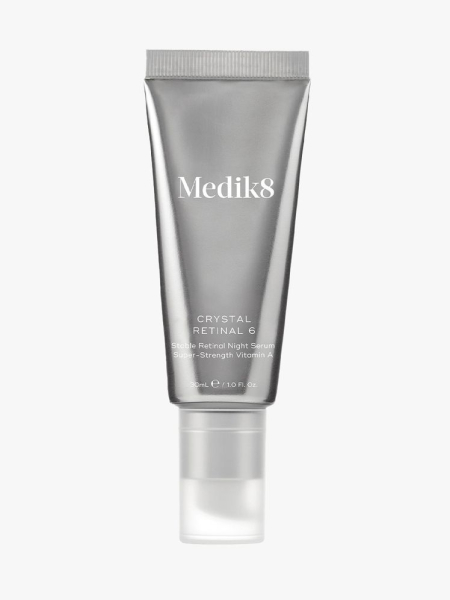
Best Retinal Serum Overall: Medik8 Crystal Retinal
 Save to wishlistSave to wishlist
Medik8
Crystal Retinal 6
$87
Amazon
$87
Dermstore
Why we love it: With strengths ranging from 0.01% to 0.24% retinaldehyde, Medik8 Crystal Retinal has something for everyone, from sensitive skin newbies to seasoned retinoid pros. Its stability system sets it apart, which is essential to ensuring you’re getting an effective formula with minimal irritation. This formulation uses crystal encapsulation technology (like encapsulated retinol, just with retinal), a patented carrot seed oil complex, and airtight packaging—all designed to keep the retinal molecule ultra-potent and ultra-gentle. “It’s also formulated with hydrating ingredients like glycerin and hyaluronic acid to buffer any potential irritation, and the texture is creamy and fast-absorbing,” says Dr. Berry.
The gradual system has made it popular among multiple Allure editors. “The brand makes it simple to ease into retinal use: You start with level 1 (sensitive) or 3 (beginner), then graduate to higher concentrations once your skin can tolerate them,” says former Allure content director Kara McGrath. "I haven't experienced any irritation with level 3, a rarity for my sensitive skin.”
Allure senior commerce director Shanna Shipin applying the Medik8 Crystal Retinal 1
Shanna Shipin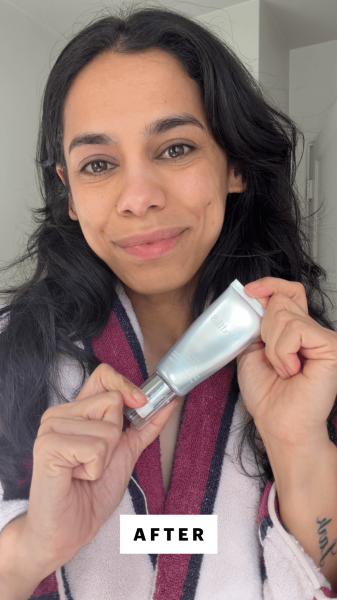
Shipin after applying the Medik8 Crystal Retinal 1
Shanna Shipin
Allure features director Dianna Singh applying the Medik8 Crystal Retinal 6
Dianna Singh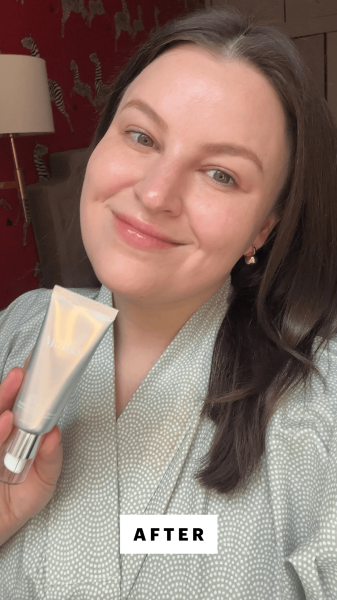
Singh after applying the Medik8 Crystal Retinal 6
Dianna Singh
Tester feedback from senior commerce director Shanna Shipin
AccordionItemContainerButtonLargeChevron
"I may be a beauty editor, but I'm new to retinal! After years of being spooked by the ingredient, I tried a few ‘clean’ retinol alternatives and wasn't compelled to keep any in my routine. It wasn't until I realized that Medik8 had an amazing gradual strength system that started at a very gentle beginner percentage of 0.01% retinal. After you finish a bottle and your skin tolerates it, you can carry onto the next! I started with the lowest-dose (Level 1) serum for very sensitive skin types, and it's been great for my dehydrated, eczema-prone skin. I especially have to be careful of dermatitis around my eyes, which tells me instantly when I've gone too far with a product. I'm on bottle number 2 of this level, and am just about ready to move on to level 3. I've seen an improvement in my closed comedones on my forehead, but have not yet seen quite the wrinkle-minimizing I'm hoping to see in the future; I haven't had a flare-up due to this product, so I know it's time to move up. What I love about this formula is that it's not as drying as other vitamin A (or retinol-adjacent) serums I've tried. There's glycerin in the formula, as well as HA to help offset overly drying out my skin. It's a breeze to rub in, and you hardly need any out of the pump-top to cover your face. The only drawback is that too much comes out of the bottle at once. I'd love for half of what is dispensed, just so I don't overdo it, or waste product!" —Shanna Shipin, senior commerce director
Tester feedback from Allure features director Dianna Singh
AccordionItemContainerButtonLargeChevron
“When vitamin A works, it really works—and this formula is a testament to the ingredient's line-smoothing prowess. Plus, it's one of the few that doesn't make my skin extra sensitive or turn my pillow yellow. Once I finish this bottle, I'm going to move up to the ‘advanced’ strength version.” —Dianna Singh, Allure features director
More to know
AccordionItemContainerButtonLargeChevron
- Retinal percentage: 0.01%, 0.03%, 0.06%, 0.1%, 0.2%, 0.24% twin-encapsulated retinaldehyde
- Other key ingredients: glycerin, hyaluronic acid
- Fragrance-free: yes
- Who it’s for: beginner or expert retinal users
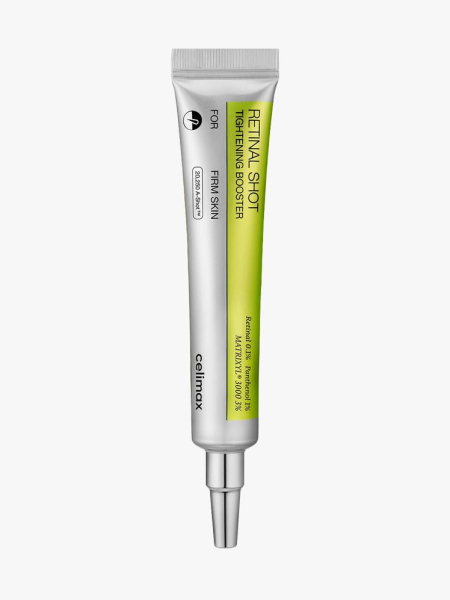
Best for Dry Skin: Celimax The Vita A Retinal Shot Tightening Booster
 Save to wishlistSave to wishlist
Celimax
The Vita A Retinal Shot Tightening Booster
$20 $17 (15% off)
Amazon
$24
Ulta Beauty
Allure editorial assistant Jennet Jusu applying the Celimax The Vita A Retinal Shot Tightening Booster
Jennet Jusu
Why we love it: Like so many gentle K-beauty brands, leave it to Celimax to figure out how to make retinal feel a little less intimidating. The Vita A Retinal Shot Tightening Booster pairs 0.1% retinal with the brand’s nano-sized delivery system, which breaks the retinal into smaller particles so it can disperse more evenly across the skin and penetrate more efficiently, helping smooth bumpy texture and refine skin with less irritation than stronger vitamin A products. The formula also contains 1% panthenol to cushion, soothe, and support the skin barrier, plus 3% Matrixyl 3000, a popular synthetic peptide complex made of palmitoyl tripeptide-1 and palmitoyl tetrapeptide-7, well-studied for their ability to support collagen production and improve skin firmness.
Tester feedback from editorial assistant Jennet Jusu
AccordionItemContainerButtonLargeChevron
“I’m getting more into K-beauty and trying skin care that can actually make a difference for my dry, hyperpigmentation-prone skin. Celimax’s The Vita A Retinal Shot Tightening Booster is super lightweight and has basically no scent, which I love. After a few uses, my skin felt a little firmer, and by day three, I noticed one stubborn pore already looked smaller. I ended up liking it best sandwiched between my moisturizer and face mist, and it layered really nicely before I reapplied my sunscreen.” —Jennet Jusu, editorial assistant
More to know
AccordionItemContainerButtonLargeChevron
- Retinal percentage: 0.1%
- Other key ingredients: 1% panthenol, Matrixyl 3000
- Fragrance-free: yes
- Who it’s for: everyone
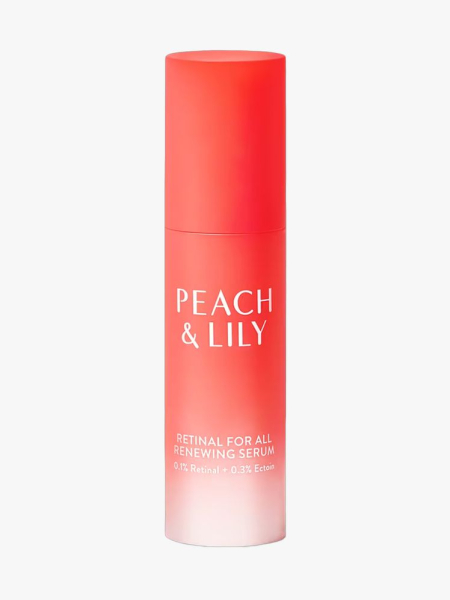
Best for Sensitive Skin: Peach & Lily Retinal For All Renewing Serum
 Save to wishlistSave to wishlist
Peach & Lily
Retinal For All Renewing Serum
$55
Ulta Beauty
Allure contributing commerce writer Christa Joanna Lee applying the Peach & Lily Retinal For All Renewing Serum
Christa Joanna Lee
Why we love it: If your complexion goals include brighter, more even-looking skin—but your skin is notoriously sensitive to actives—this serum makes retinal feel surprisingly doable. Peach & Lily Retinal For All Renewing Serum uses 0.1% encapsulated retinal, which releases slowly into the skin to help smooth uneven tone and boost radiance. “It’s potent yet gentle, with the help of ectoin, which has been clinically proven to reduce retinoid-related irritation,” says Cheryl Karcher, MD, a board-certified dermatologist based in New York City.
Plenty of retinoid serums say they’re friendly to sensitive skin, but this one backs it up: In the brand’s clinical testing, the formula showed zero (!) water loss after application and virtually no skin-barrier disruption. A calming lineup of heartleaf extract, ceramides, hyaluronic acid, and antioxidants does the behind-the-scenes work to keep irritation at bay while results build. “Together, it improves texture and tone with minimal side effects,” says Dr. Karcher.
Tester feedback from contributing commerce writer Christa Joanna Lee
AccordionItemContainerButtonLargeChevron
“The bright yellow hue of Peach & Lily’s Retinal All-Renewing Serum isn’t just to cheer up your day—it turns out retinal in its pure form naturally runs that color (and yes, it disappears as soon as you rub it in). The texture hits a sweet spot, too: not so watery that it drips off before you can get it on your face, but not so thick that you’re massaging forever. Instead of leaving a glassy sheen, it feels like it’s sinking deeper and leaving things plush and cushioned from within. After a few nights, my skin felt baby-soft with zero hint of irritation.” —Christa Joanna Lee, contributing commerce writer
More to know
AccordionItemContainerButtonLargeChevron
- Retinal percentage: 0.1% encapsulated retinal
- Other key ingredients: ectoin, heartleaf extract, ceramides
- Fragrance-free: yes
- Who it’s for: people with sensitive skin
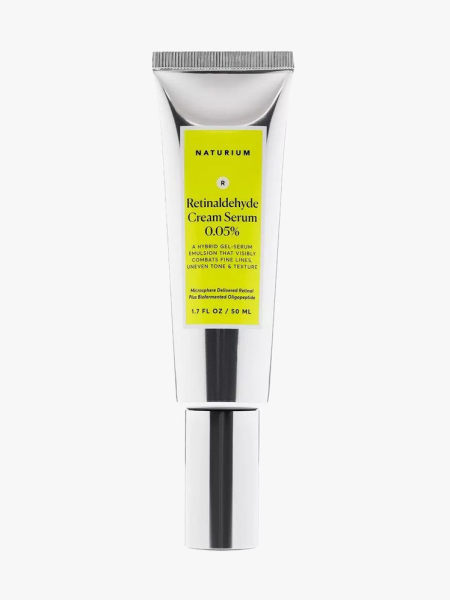
Best for Beginners: Naturium Retinaldehyde Cream Serum 0.05%
 Save to wishlistSave to wishlist
Naturium
Retinaldehyde Cream Serum 0.05%
$29 $22 (24% off)
Amazon
$29
Ulta Beauty
$29
Soko Glam
Allure commerce editor Sarah Han applying the Naturium Retinaldehyde Cream Serum 0.05%
Sarah Han
Why we love it: For newbies ready to dip a toe into the world of retinal, the lowest concentration of Naturium's Retinaldehyde Cream Serum—which is available in 0.05%, 0.1%, and 0.15% strengths—is a gentle yet effective place to start. “Even at the 0.05% retinal concentration, it provides meaningful collagen support and smoothing effects while minimizing barrier disruption,” says Whitney Hovenic, MD, a board-certified dermatologist based in Reno, NV. “Gentle retinal options like this also help patients stay consistent with a lower risk of irritation, and consistency is what ultimately drives long-term results.”
The rest of the ingredient list only strengthens its case for sensitive skin, pairing retinal with a cushioning base of glycerin to keep skin hydrated and comfortable. Fermented yeast extracts and soy amino acids support the skin barrier, while pomegranate extract and vitamin E provide antioxidant protection against daily environmental stressors. The creamy texture is also part of what makes it so approachable: It delivers the smoothing benefits of vitamin A without leaving sensitive skin feeling dry and tight.
Tester feedback from commerce editor Sarah Han
AccordionItemContainerButtonLargeChevron
“I've been through two tubes of this Naturium retinal, starting with 0.05% before I worked my way up to 0.10%—and now they also offer 0.15%, which I'm sure my skin can tolerate since it's not particularly sensitive. I love how lightweight this gel is, and despite its fun yellow coloring, it basically disappears into your skin on contact. It's so airy and layers beautifully with all of my other nighttime skin-care products. (It's sandwiched between essence and moisturizer). I've never experienced any irritation, but if I need an extra dose of hydration in the winter, I'll follow up with a more viscous hydrating serum like Torriden's Dive In Serum. I love how accessible Naturium's price points are across the board, but especially for a retinal. $29 in this economy? Not too shabby when other formulas easily surge past $50.” —Sarah Han, commerce editor
More to know
AccordionItemContainerButtonLargeChevron
- Retinal percentage: 0.05%, 0.1%, 0.15%
- Other key ingredients: glycerin, fermented yeast extracts, soy amino acids, vitamin E, pomegranate extract
- Fragrance-free: yes
- Who it’s for: people with sensitive skin
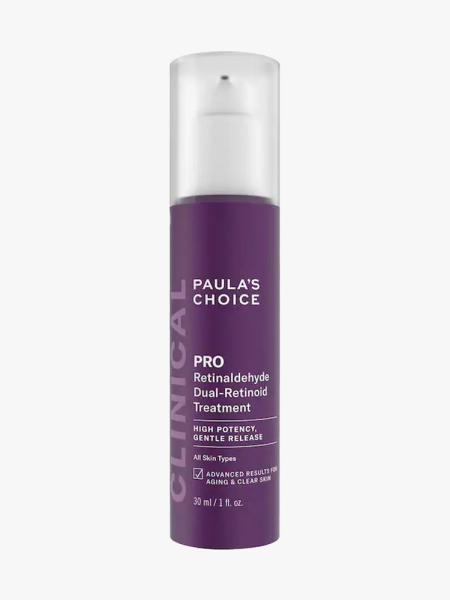
Best for Experienced Users: Paula’s Choice Clinical Pro Retinaldehyde Dual‑Retinoid Treatment
 Save to wishlistSave to wishlist
Paula's Choice
Clinical Pro Retinaldehyde Dual‑Retinoid Treatment
$68
Amazon
$68
Sephora
Allure editor in chief Jessica Cruel applying the Paula’s Choice Clinical Pro Retinaldehyde Dual‑Retinoid Treatment
Jessica Cruel
Why we love it: While 0.1% retinal alone is typically considered beginner-friendly, it’s the addition of 0.16% Adapinoid (oleyl adapalenate) that makes the Paula’s Choice Clinical Pro Retinaldehyde Dual-Retinoid Treatment more of an intermediate-to-advanced retinoid formula. Oleyl adapalenate is an oil-soluble adapalene derivative designed to be gentler than traditional adapalene, and together the two retinoids tackle skin from different angles: Retinal supports collagen production, smooths texture, and softens the look of fine lines, while the adapalene derivative encourages additional cell turnover and promotes clearer-looking skin.
Fortunately, the formula doesn't simply throw two retinoids together and call it a day: Jojoba oil, glycerin, and dimethicone cushion skin against dryness and improve tolerability. Saccharomyces ferment, mushroom extract, pomegranate extract, and vitamin E further soothe and support the skin barrier, making this an ideal option “for those who want stronger mature skin benefits, but not quite ready for prescription retinoids,” says Dr. Hovenic.
Tester feedback from editor in chief Jessica Cruel
AccordionItemContainerButtonLargeChevron
“It has a lightweight, silky texture that smooths easily over skin—no stinging, no burning. Like all dermatologists recommend, I only use about a pea-size amount all over my face at night before topping with my favorite thick moisturizer. I had a deflated pimple that just wouldn't disappear, and after a few nights using this retinal it was noticeably smaller. A couple weeks later the post-acne darkness was less pronounced as well.” —Jessica Cruel, editor in chief
More to know
AccordionItemContainerButtonLargeChevron
- Retinal percentage: 0.1% retinal
- Other key ingredients: 0.16% Adapinoid, jojoba oil, glycerin, dimethicone, Saccharomyces ferment, mushroom extract, pomegranate extract, vitamin E
- Fragrance-free: yes
- Who it’s for: people who want a more advanced retinoid option
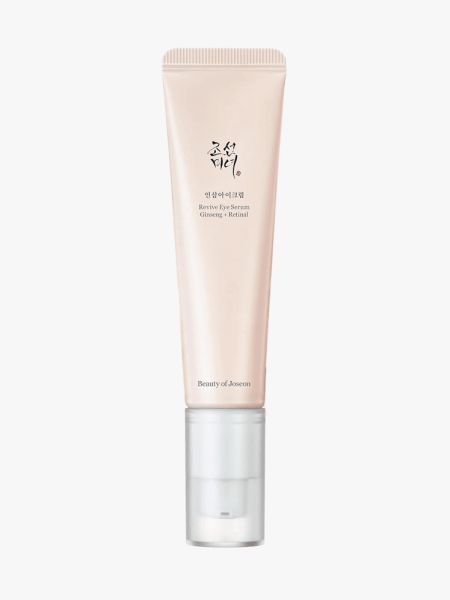
Best Eye Cream: Beauty of Joseon Revive Eye Cream Ginseng + Retinal
 Save to wishlistSave to wishlist
Beauty of Joseon
Revive Eye Cream Ginseng + Retinal
$17
Amazon
$17
Sephora
Han applying the Beauty of Joseon Revive Eye Cream Ginseng + Retinal
Sarah Han
Why we love it: If your under-eyes are starting to rat you out for your doom-scrolling and repeat pizza nights, Beauty of Joseon Revive Eye Cream is one of our favorite Korean eye creams for faking the look of eight hours of sleep—though maybe hydrate and log off once in a while, yeah? Inspired by traditional Korean hanbang skincare, this silky cream blends ginseng (the OG brightener and circulation booster) with gentle, effective retinal to smooth fine lines and depuff tired eyes. The lightweight, serum-like texture melts right in, leaving your eye area looking firmer, glowier, and way more put-together than you feel.
Tester feedback from Han
AccordionItemContainerButtonLargeChevron
"I'm unconvinced eye creams provide long-term, visible results (e.g. minimizing the look of fine lines and wrinkles) without retinoids involved. Beauty of Joseon's Revive has been a staple in that regard. The custardy formula absorbs almost immediately and makes my undereyes look refreshed and slightly brighter. I even dab some onto my forehead lines (not super noticeable as of now, but you can't be too preventative)." —Han, commerce editor
More to know
AccordionItemContainerButtonLargeChevron
- Retinal percentage: not disclosed
- Other key ingredients: ginseng, niacinamide
- Fragrance-free: yes
- Who it’s for: all skin types
More retinal serums we love:
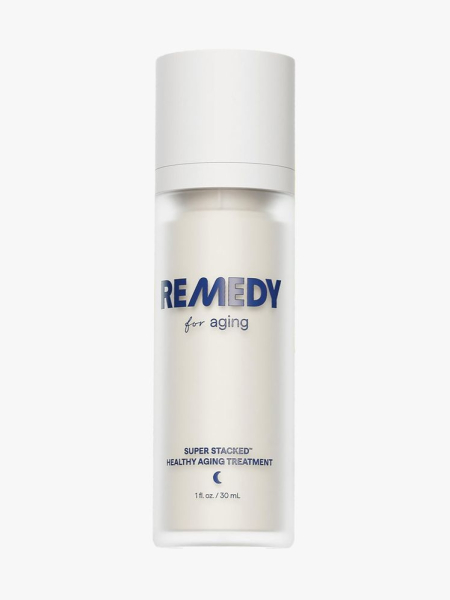
Best for Dull Skin: Remedy Science Super Stacked Healthy Aging Treatment
 Save to wishlistSave to wishlist
Remedy
Super Stacked Healthy Aging Treatment
$35
Amazon
Why we love it: If you’re already well-versed in the benefits of retinal and ready to streamline your routine, Remedy Science Super Stacked Healthy Aging Treatment makes a strong case for doing more with less. It combines 0.1% encapsulated retinol and 0.05% retinaldehyde—“a formulation recommended for more experienced retinol users to smooth fine lines and improve texture,” says Patricia Oyetakin, MD, a board-certified dermatologist based in Newnan and Stockbridge, GA. From there, it layers in peptides like argireline and Matrixyl 3000 for firmness, glycolic acid for gentle resurfacing, niacinamide for brightness, and ceramides to keep skin comfortable. “It’s truly a one-and-done option for busy people who want visible results without a complicated routine,” says Dr. Oyetakin.
More to know
AccordionItemContainerButtonLargeChevron
- Retinal percentage: 0.05%
- Other key ingredients: 0.1% encapsulated retinol, 2% argireline, glycolic acid, 2% niacinamide, Matrixyl 3000
- Fragrance-free: yes
- Who it’s for: people with mature skin
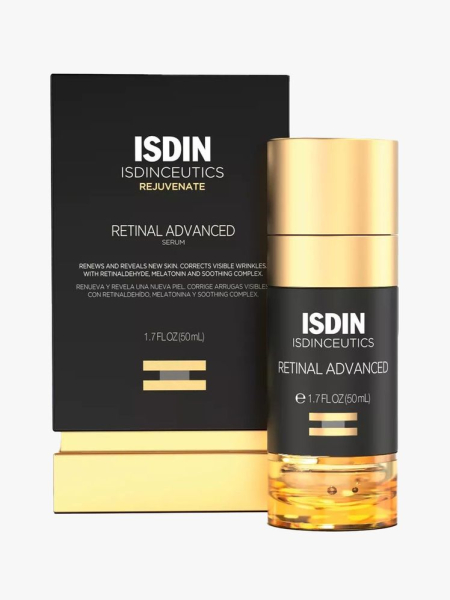
Best for Mature Skin: Isdin Isdinceutics Retinal Advanced Serum
 Save to wishlistSave to wishlist
Isdin
Isdinceutics Retinal Advanced Serum
$185
Amazon
$185
Dermstore
Why we love it: Not your first rodeo with retinal? Then Isdin Retinal Advanced Rejuvenating Facial Night Serum is a great next step to level up your routine. “It’s a dual-phase formula with both an oil phase and an aqueous phase, leaning more toward the hydrating and moisturizing side,” says Dr. Levit. “The oil phase delivers the key actives—including retinaldehyde and bakuchiol—while ingredients like dimethicone help protect the skin and glycerin boosts hydration. Melatonin is another standout for its skin-repairing benefits,” he says. If you have sensitive skin, just a heads-up: It’s lightly fragranced. But, according to Dr. Levit, “most of my patients find the scent pleasantly subtle—and they actually appreciate that it tones down the overly ‘clinical’ smell you sometimes get with fragrance-free treatments.”
More to know
AccordionItemContainerButtonLargeChevron
- Retinal percentage: not disclosed
- Other key ingredients: bakuchiol, melatonin
- Fragrance-free: no
- Who it’s for: all skin types
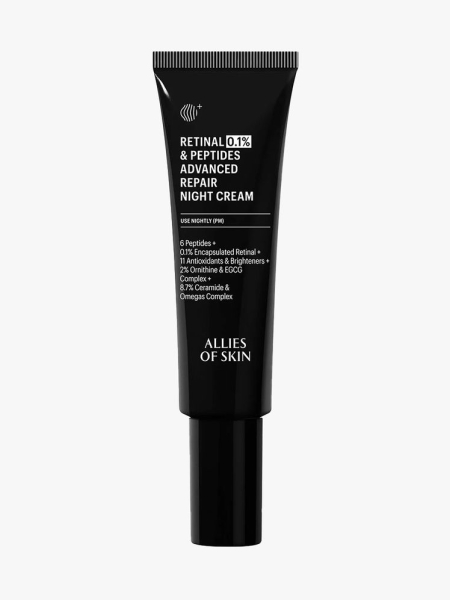
Best for Dark Spots: Allies of Skin Retinal 0.1% & Peptides Advanced Repair Night Cream
 Save to wishlistSave to wishlist
Allies of Skin
Retinal 0.1% & Peptides Advanced Repair Night Cream
$130
Amazon
$130
Nordstrom
$130
Dermstore
Why we love it: From dryness and breakouts to fine lines and dark spots, Allies of Skin’s Retinal 0.1% & Peptides Advanced Repair Night Cream is your skincare all-in-one. It blends encapsulated retinal (for a gentler retinoid experience), six firming peptides, and 11 antioxidants and brighteners to smooth texture, give an even tone, and bring out your skin’s glow. “This serum is great for anyone looking for retinal paired with barrier-loving ingredients like ceramides, and peptides,” says Dr. Berry. “It’s powerful but gentle, feels soft on the skin, and layers well with other actives. I especially recommend it for patients with drier skin.”
More to know
AccordionItemContainerButtonLargeChevron
- Retinal percentage: 0.1%
- Other key ingredients: peptides, ceramides, omegas
- Fragrance-free: yes
- Who it’s for: all skin types, especially for dry skin
Frequently Asked Questions
Retinal versus retinol: What's the difference?
“Retinal and retinol are both vitamin A derivatives, but retinal is one step closer to retinoic acid—the active form your skin uses. That means it works faster and is typically more potent than retinol,” says Dr. Levit. While retinol needs two conversions in the skin to become active, retinal only needs one, so you’ll often see quicker results when smoothing fine lines, improving texture, and fading dark spots. That said, “retinal can also be slightly more intense, so it’s usually recommended for those who’ve already built some tolerance to retinoids,” he says.
Is it better to use retinol or retinal?
It depends. “If you have sensitive skin or are brand-new to retinoids, retinol is a great place to start,” says Dr. Berry. “If you're already tolerating retinol well, or you're targeting deeper wrinkles, pigmentation, or acne, retinal can offer faster and more noticeable results with less irritation than prescription-strength options.”
Meet the experts
- Sonia Badreshia-Bansal, MD, a board-certified dermatologist and RealSelf expert based in Danville, CA
- Asmi Berry, DO, a board-certified dermatologist in Los Angeles
- Whitney Hovenic, MD, a board-certified dermatologist and co-founder of Spooge based in Reno, NV
- Cheryl Karcher, MD, a board-certified dermatologist at Center Aesthetic & Dermatology based in New York City
- Noah Levit, MD, a board-certified dermatologist of Dermatology Physicians of Connecticut based in Fairfield, Hamden, and Norwalk, CT
- Patricia Oyetakin, MD, a board-certified dermatologist of Epiphany Dermatology based in Newnan and Stockbridge, GA
How we test and review products
When Allure tests a product, our editors look at it from every angle in an effort to best serve you. We review ingredients, scrutinize brand claims, and, when necessary, examine peer-reviewed scientific and medical studies. In addition to testing each and every product that's included in each and every review, we rely on experts who shape their fields, including dermatology, cosmetic chemistry, and medicine, to help us vet the ingredients and formulas.
For our list of the best retinal serums, we considered each product's performance across five primary categories: product ingredients and efficacy, packaging, fragrance, texture, and product wear. Every product was determined to have excelled in each category by our editorial team, which is composed of in-house writers and editors as well as contributors—along with special consideration from dermatologists. To learn more information on our reporting and testing processes, read our complete reviews process and methodology page.s involved in our reporting, check out our complete reviews process and methodology page.
Our staff and testers
A beauty product is a personal purchase. You might be searching for a face cream to address persistent dryness or a new nail product to add to your Sunday self-care routine; you may simply be browsing around for the latest launches to hit the hair market. No matter what you seek or your individual needs and concerns, Allure wants to ensure that you love anything we recommend in our stories. We believe that having a diverse team of writers and editors—in addition to the wide range of outside testers and industry experts we regularly call upon—is essential to reaching that goal.
After all, can we really say a skin-care product is the "best" for people over 50 if the only testers we've solicited opinions from folks who have yet to hit 30? Can we honestly deem a high-end diffuser worthy of your hard-earned cash if it's never been tested on curls? We're proud that our staff spans a wide range of ages, skin tones, hair textures, genders, and backgrounds, which means that we are able to fairly assess any beauty product that comes into the beauty closet.

 Photo: StocksySave this storySave this story